Building an inclusive workplace
The reason to build a genuinely inclusive workplace isn't primarily strategic, though of course the strategic case is real. It's because people spend a significant portion of their lives at work, and they deserve to spend that time without pretending to be someone they're not. If we only care about inclusion when it's convenient, we'll stop caring the moment it becomes inconvenient.
I often tell people about this example. Last year we gave out Pride lanyards across our offices. Not long after, I got a message from someone asking why colleagues in another location hadn't received theirs yet.
I've thought about that message a lot. It wasn't a complaint. There was no frustration in it, just a quiet kind of concern. It mattered to this person that everyone had one. Not as a gesture, but as a signal. Someone, somewhere, was sitting at their desk wondering whether they'd been forgotten. And someone else noticed and said something.
The delay was logistical, nothing more. But the message told me something about our culture that I found genuinely encouraging. People were paying attention. They were holding us to our own values — not loudly, not as a criticism, just as a reminder.
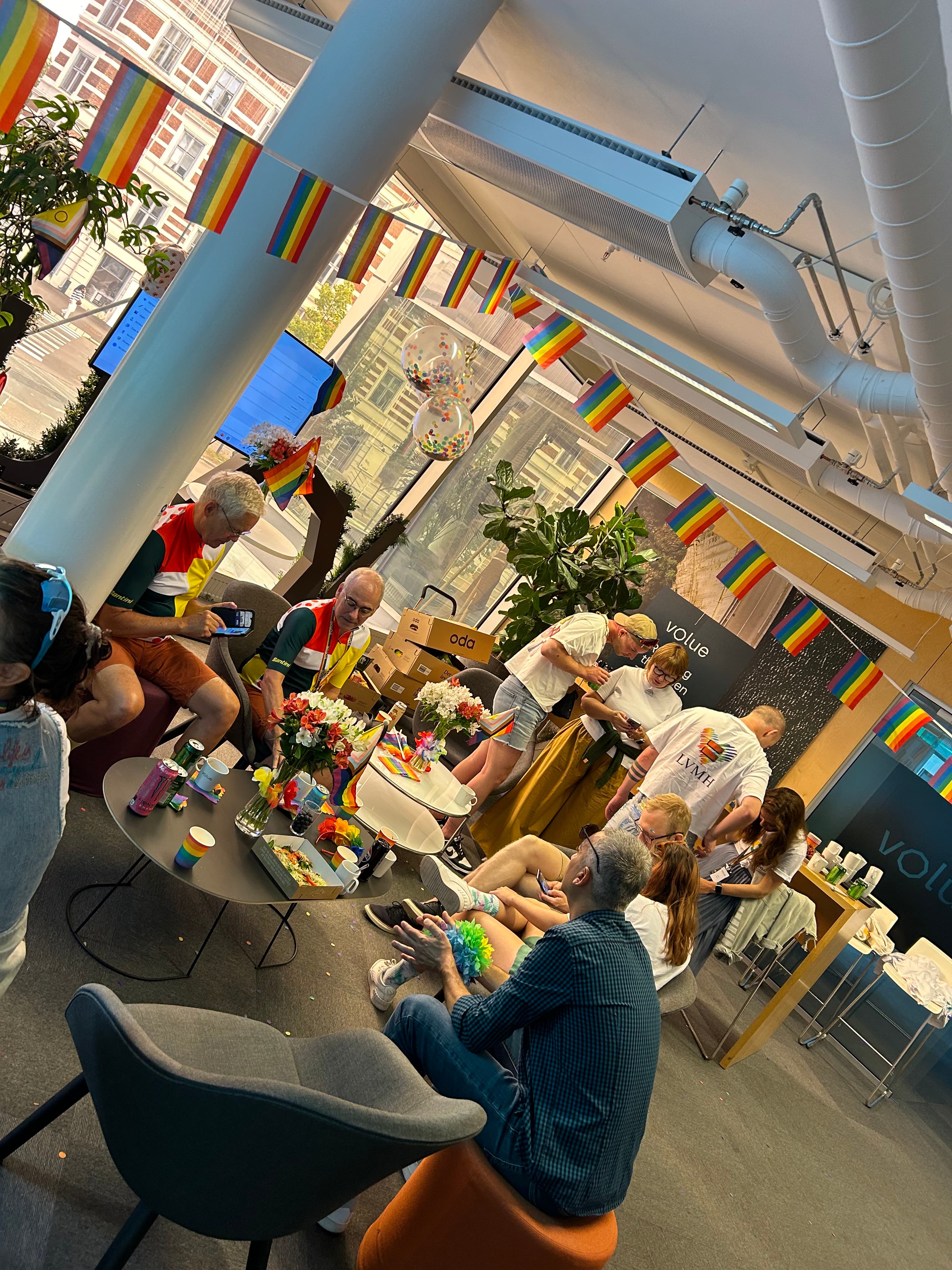
Celebrating Pride at Volue
We will do several things to celebrate Pride this month, from events, to internal and external visibility. That's worthwhile. But none of it means much if it isn't connected to how we operate the rest of the year. Inclusion lives in hiring decisions. In whether a meeting makes space for the quieter voice. In whether someone feels safe raising a difficult topic. It lives in the small, yet challenging, moments that many of us experience each and every day.
Pride month, for me, is a chance to be more open about the values we should be living anyway. A moment to recognise the people for whom visibility still matters enormously. Most of all, as a reminder that the world is genuinely better when people can be themselves in it.